Journal Description
Entropy
Entropy
is an international and interdisciplinary peer-reviewed open access journal of entropy and information studies, published monthly online by MDPI. The International Society for the Study of Information (IS4SI) and Spanish Society of Biomedical Engineering (SEIB) are affiliated with Entropy and their members receive a discount on the article processing charge.
- Open Access— free for readers, with article processing charges (APC) paid by authors or their institutions.
- High Visibility: indexed within Scopus, SCIE (Web of Science), Inspec, PubMed, PMC, Astrophysics Data System, and other databases.
- Journal Rank: JCR - Q2 (Physics, Multidisciplinary) / CiteScore - Q1 (Mathematical Physics)
- Rapid Publication: manuscripts are peer-reviewed and a first decision is provided to authors approximately 20.9 days after submission; acceptance to publication is undertaken in 3.4 days (median values for papers published in this journal in the first half of 2026).
- Recognition of Reviewers: Reviewers whose reports are timely and of high quality receive an APC discount voucher for a future publication in an MDPI journal. Become a reviewer.
- Companion journals for Entropy include: Foundations, Thermo and Complexities.
- Journal Cluster of Atomic, Molecular, and Optical (AMO) Physics: Entropy, Photonics, Atoms, Lights, Optics, Physics and Quantum Beam Science.
Impact Factor:
2.1 (2025);
5-Year Impact Factor:
2.3 (2025)
Latest Articles
Explicit Future Pattern-Enhanced Multivariate Time Series Forecasting
Entropy 2026, 28(9), 1031; https://doi.org/10.3390/e28091031 (registering DOI) - 19 Sep 2026
Abstract
Multivariate time series forecasting requires models to infer future values and how the temporal structure evolves beyond the observation boundary. A central challenge is to define this evolution as an intermediate prediction and connect it to value forecasting. We propose explicit future pattern
[...] Read more.
Multivariate time series forecasting requires models to infer future values and how the temporal structure evolves beyond the observation boundary. A central challenge is to define this evolution as an intermediate prediction and connect it to value forecasting. We propose explicit future pattern (EFP)-enhanced forecasting, which represents evolution as a multiscale change from the last observed pattern. A separately supervised predictor estimates this change from history, and a decoder combines the predicted pattern with historical behavior and variable relations. A mixed training strategy exposes the decoder to supervised, predicted, and perturbed patterns; inference requires only historical input. Experiments on nine public datasets and four forecasting horizons evaluate the forecasting accuracy and the contribution of explicit future patterns. Predicted patterns outperform shuffled patterns on all nine datasets, and the error increases in aggregate as sample alignment is weakened. Ablations support the roles of dynamic multiscale evolution, frequency information, and mixed training. These results indicate that explicit future patterns can provide useful, inspectable guidance for multivariate forecasting when their estimates remain aligned with the current sample.
Full article
(This article belongs to the Special Issue Advances in Time Series Analysis: Methods, Applications and Emerging Trends)
Open AccessArticle
On a Grover-Based Quantum Signature Scheme and a Teleportation-Based Design
by
Guoliang Xu, Songyao Xue, Xiangfu Zou and Yumei Zhang
Entropy 2026, 28(9), 1030; https://doi.org/10.3390/e28091030 (registering DOI) - 18 Sep 2026
Abstract
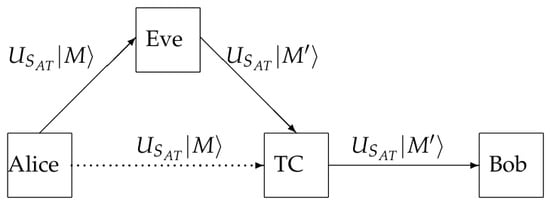
Quantum computation, with tools including Grover’s algorithm, quantum walks, and quantum teleportation, plays an important role in quantum signature designs. Although such designs offer signature functionality, they sometimes come at the cost of security. This paper first reviews a Grover-based scheme and shows
[...] Read more.
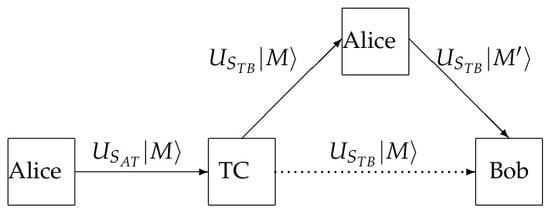
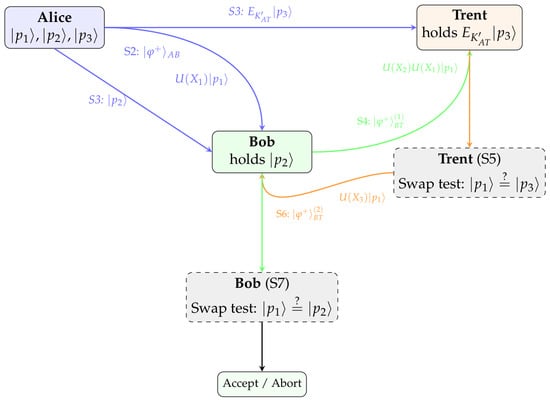
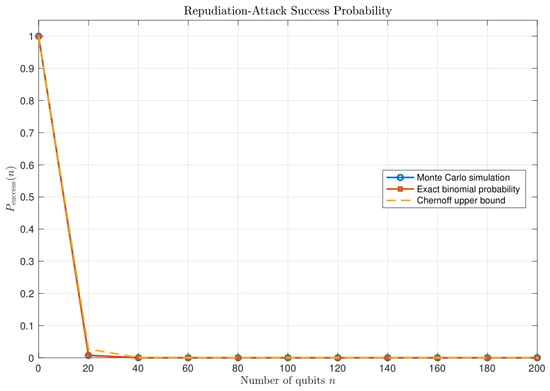
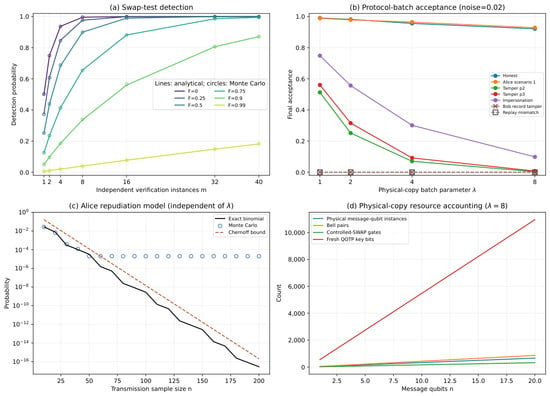
Quantum computation, with tools including Grover’s algorithm, quantum walks, and quantum teleportation, plays an important role in quantum signature designs. Although such designs offer signature functionality, they sometimes come at the cost of security. This paper first reviews a Grover-based scheme and shows how man-in-the-middle attacks enable complete key recovery, Alice’s disavowal, and Bob’s forgery. We then propose an arbitrated quantum signature scheme based on quantum teleportation and a strengthened quantum one-time pad. The scheme is designed for quantum messages with known classical descriptions, not for arbitrary unknown quantum states. The security of the proposed scheme is analyzed through a formal adversarial model for unforgeability and non-repudiation, and its resilience against replay, intercept-and-resend, man-in-the-middle, entanglement, and collective or coherent attacks is examined. Numerical simulations and an asymptotic resource analysis further illustrate the practicality of the scheme.
Full article
(This article belongs to the Special Issue Quantum Algorithms and Quantum Machine Learning)
►▼
Show Figures

Figure 1
Open AccessReview
Computational Methods for Molecular Dynamics of Supercooled Water Between 200 and 273 K
by
Francisco Carrascoza, Konrad Gorzelanczyk and Jacek Blazewicz
Entropy 2026, 28(9), 1029; https://doi.org/10.3390/e28091029 (registering DOI) - 18 Sep 2026
Abstract
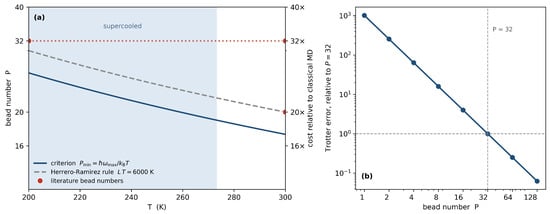
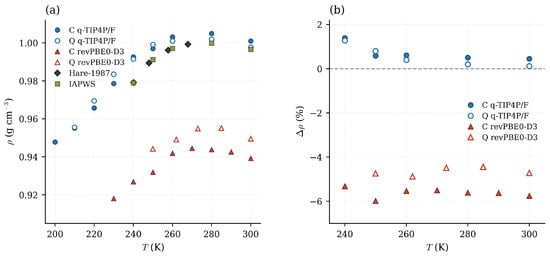
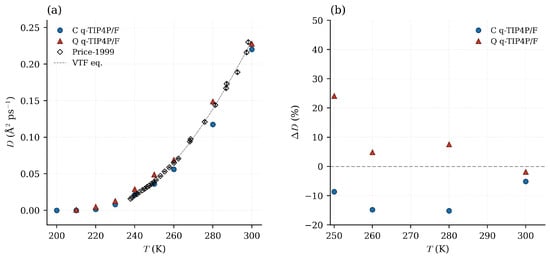
Water exhibits anomalous thermodynamic and structural behaviour as it approaches and crosses below its melting point. Modelling this behaviour computationally remains challenging: as temperature decreases, nuclear quantum effects (NQEs) become increasingly significant, sampling efficiency deteriorates, and the choice of computational method critically impacts
[...] Read more.
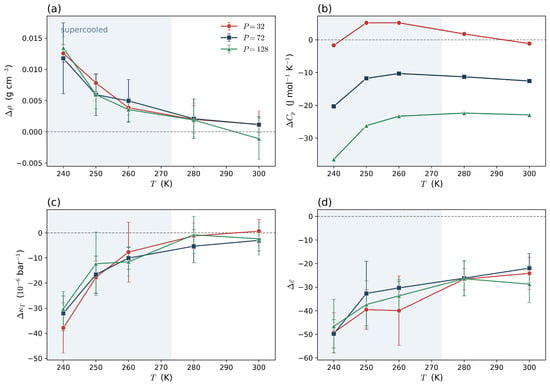
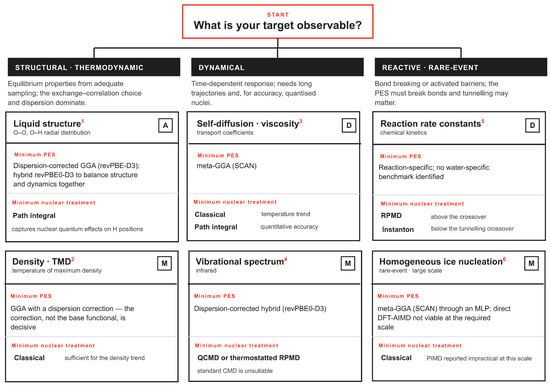
Water exhibits anomalous thermodynamic and structural behaviour as it approaches and crosses below its melting point. Modelling this behaviour computationally remains challenging: as temperature decreases, nuclear quantum effects (NQEs) become increasingly significant, sampling efficiency deteriorates, and the choice of computational method critically impacts the accuracy of predicted structural and dynamical properties. This review aims to provide practitioners with a practical guide to performing reliable molecular dynamics simulations of water at low temperatures, with emphasis on the supercooled regime (200–273 K). We examine commonly used ab initio molecular dynamics (AIMD) methods and critically evaluate strategies for incorporating nuclear quantum effects through path-integral molecular dynamics (PIMD), ring-polymer MD (RPMD), and centroid MD (CMD). On cooling through the supercooled regime, the relative importance of nuclear quantum effects increases steadily, so that the error incurred by treating the nuclei classically grows and affects the structural and dynamical properties of interest. The known limitations of density functional approximations for water’s structure are assessed in the context of their interplay with NQE treatment, rather than in isolation. By discussing practical considerations, including sampling efficiency and the temperature scaling of path-integral bead counts, alongside the methods themselves, this review is intended to serve as a reference for reliable AIMD studies of supercooled water.
Full article
(This article belongs to the Topic Simulation and Computation Innovations with Real-World Applications)
►▼
Show Figures

Figure 1
Open AccessArticle
Hulls of Non-Separable Constacyclic Codes over
by
Xiying Zheng, Bo Kong and Enbin Zhang
Entropy 2026, 28(9), 1028; https://doi.org/10.3390/e28091028 - 17 Sep 2026
Abstract
Let and
[...] Read more.
Let and , where , p is a prime, and . We investigate the algebraic structure of the non-separable constacyclic codes over the mixed-alphabet ring and then determine the generator polynomials and the dimensions of their hulls. As an application, using the construction X, we obtain some new quantum error-correcting codes that are not listed in the online quantum codes database.
Full article
(This article belongs to the Section Quantum Information)
Open AccessArticle
Unsupervised Feature Selection via Self-Supervised HSIC and Elastic Net Regularization
by
Yuhong Chen, Tinghua Wang and Long Zou
Entropy 2026, 28(9), 1027; https://doi.org/10.3390/e28091027 - 16 Sep 2026
Abstract
Unsupervised feature selection is essential for high-dimensional data analysis, where irrelevant and redundant variables may obscure the intrinsic data structure, reduce interpretability, and degrade downstream learning performance. The key challenge is to identify informative features without label supervision while suppressing redundant selections under
[...] Read more.
Unsupervised feature selection is essential for high-dimensional data analysis, where irrelevant and redundant variables may obscure the intrinsic data structure, reduce interpretability, and degrade downstream learning performance. The key challenge is to identify informative features without label supervision while suppressing redundant selections under nonlinear dependencies. To address this issue, this paper proposes an unsupervised Hilbert–Schmidt Independence Criterion (HSIC)–Elastic Net (ENet) feature selection framework, termed U-HSIC-ENet. The proposed method reformulates unlabeled feature weighting as a self-supervised kernel alignment problem. Specifically, a target kernel is constructed directly from unlabeled data to encode global sample relationships, while each feature is represented by a centered and Frobenius-normalized feature-induced kernel. Feature relevance is then measured by centered kernel alignment (CKA) in a reproducing kernel Hilbert space (RKHS). The main novelty of U-HSIC-ENet lies in a unified relevance–redundancy–stability formulation. Feature–target alignment is used to estimate nonlinear relevance, whereas pairwise similarities between feature-induced kernels are used to characterize inter-feature redundancy in the same kernel alignment space. On this basis, an explicit off-diagonal redundancy penalty is incorporated into a nonnegative Elastic Net-type objective, which strengthens the suppression of co-selected similar features while preserving sparse and stable feature weighting. The resulting quadratic formulation clarifies how relevance promotion, redundancy control, sparsity, and numerical stabilization are coupled within a single optimization framework. Experiments on eight benchmark datasets under a fixed-budget evaluation protocol show that U-HSIC-ENet achieves the strongest average performance on Normalized Mutual Information (NMI), the Adjusted Rand Index (ARI), and clustering accuracy (ACC) compared with representative graph-, spectral-, and HSIC-based baselines. The advantage is the most pronounced on NMI, suggesting that the self-supervised target kernel and CKA-based relevance modeling are effective in preserving the clustering-relevant nonlinear structure. Friedman tests and Wilcoxon signed-rank tests with Holm correction provide statistical support for the observed improvements. Subsampling-based stability evaluation reveals a trade-off between clustering effectiveness and selection reproducibility: several baselines achieve higher stability scores despite the stronger average clustering performance of U-HSIC-ENet. These results indicate that the proposed framework is effective for unsupervised nonlinear feature weighting when relevance estimation, redundancy control, and stability are considered jointly.
Full article
(This article belongs to the Section Signal and Data Analysis)
Open AccessArticle
Detecting Unseen IoT Attacks with Calibrated Dual Evidence Under Low False-Positive Budget
by
Jiahui Yue, Yuliang Lu and Yi Xie
Entropy 2026, 28(9), 1026; https://doi.org/10.3390/e28091026 - 15 Sep 2026
Abstract
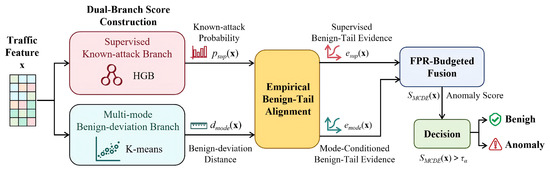
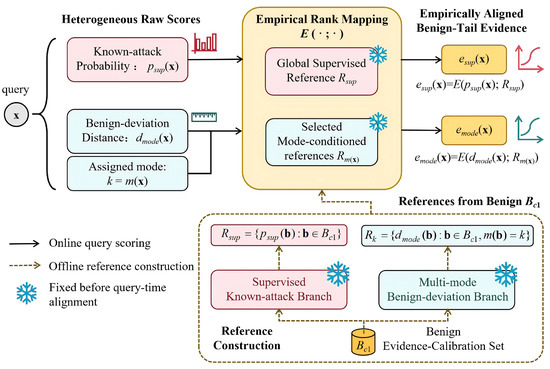
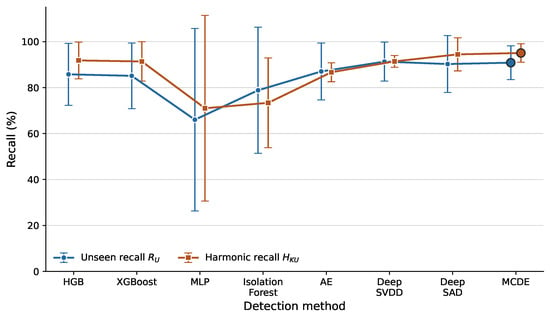
Internet of Things (IoT) traffic anomaly detection is essential for limiting device compromise and large-scale attacks. Existing detectors may miss attack families absent from model development, while heterogeneous benign traffic makes it difficult to maintain a low false-positive rate (FPR). To address these
[...] Read more.
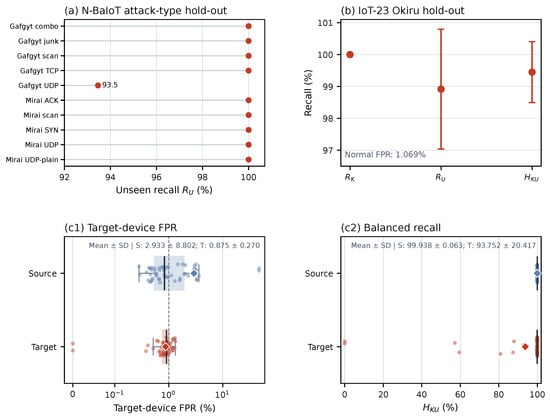
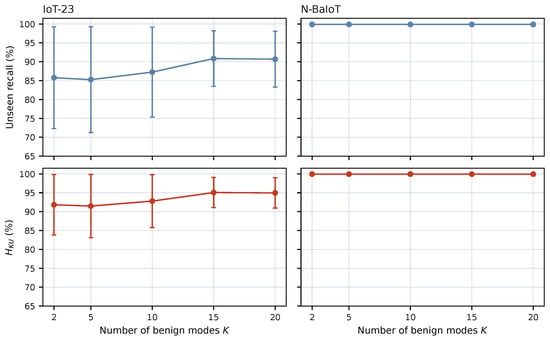
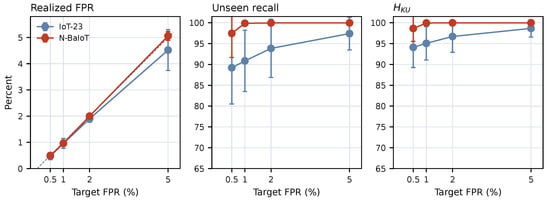
Internet of Things (IoT) traffic anomaly detection is essential for limiting device compromise and large-scale attacks. Existing detectors may miss attack families absent from model development, while heterogeneous benign traffic makes it difficult to maintain a low false-positive rate (FPR). To address these two practical limitations, we propose the Mode-Calibrated Dual-Evidence Detector (MCDE). Its supervised branch estimates the probability that a sample is malicious from labeled benign and known-attack traffic, while its benign-deviation branch measures distance from multiple learned benign traffic modes, providing a complementary route for unseen attacks. MCDE maps the heterogeneous probability and distance scores to comparable empirical benign-tail evidence, normalizes each branch by its allocated share of the target FPR, and fuses them into an anomaly score. A disjoint held-out benign set determines the decision threshold. Equivalently, the fusion compares budget-adjusted benign-tail surprisal, linking the decision rule to empirical self-information. We further establish the conditions under which the budgeted fusion controls the nominal overall FPR. Family-hold-out experiments on IoT-23 and N-BaIoT validate MCDE. At a 1% target benign FPR, MCDE improves IoT-23 unseen recall over histogram-based gradient boosting from 85.77% to 90.85% and harmonic known–unseen recall from 91.82% to 95.07%, while maintaining a 0.96% benign-test FPR. It also achieves 99.87% unseen recall on N-BaIoT.
Full article
(This article belongs to the Section Signal and Data Analysis)
►▼
Show Figures

Figure 1
Open AccessArticle
Uncertainty-Calibrated Collaborative Filtering via Heteroscedastic Bayesian Neural Networks
by
Xiaowei Wang
Entropy 2026, 28(9), 1025; https://doi.org/10.3390/e28091025 - 14 Sep 2026
Abstract
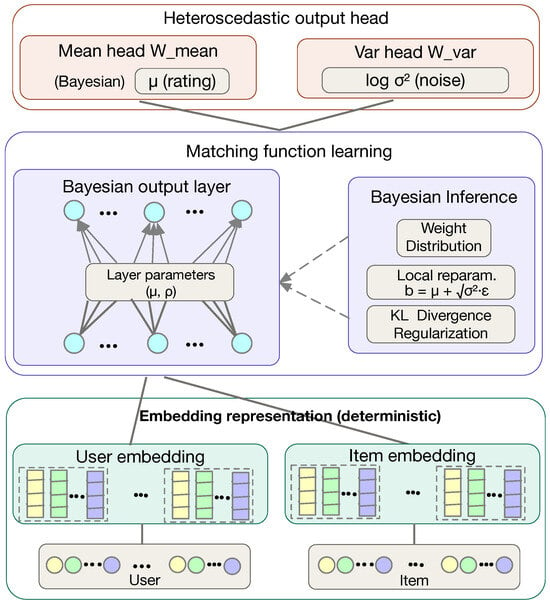
Although recommendation systems based on neural collaborative filtering (NCF) can achieve high rating accuracy, the point estimates they generate do not express prediction confidence. Existing variants that account for uncertainty, such as Monte Carlo dropout, deep ensemble models, and single-head Bayesian networks, can
[...] Read more.
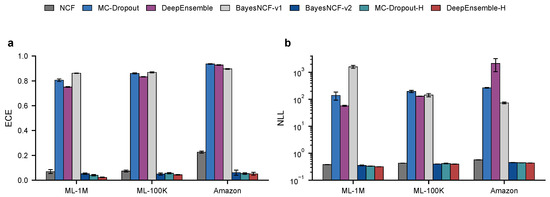
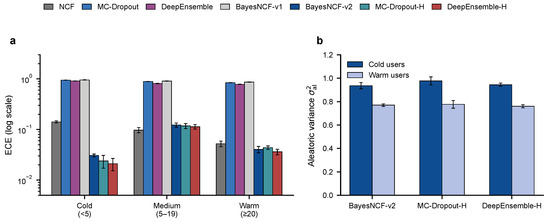
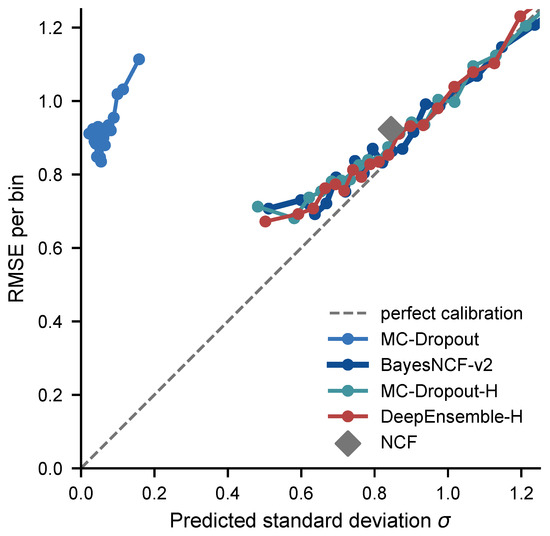
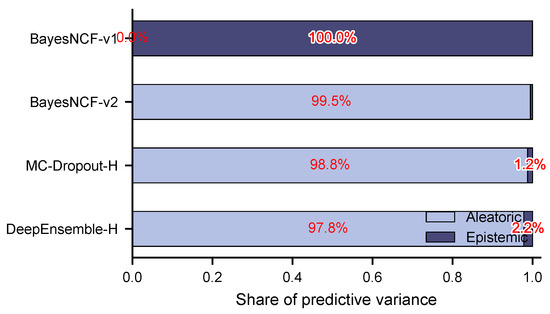
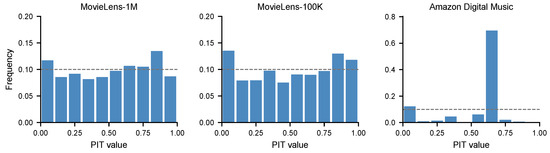
Although recommendation systems based on neural collaborative filtering (NCF) can achieve high rating accuracy, the point estimates they generate do not express prediction confidence. Existing variants that account for uncertainty, such as Monte Carlo dropout, deep ensemble models, and single-head Bayesian networks, can only capture epistemic uncertainty. We propose BayesNCF-v2, a single-model Bayesian neural collaborative filtering framework that combines a Bayes-by-Backprop output layer with a heteroscedastic head trained under the Gaussian NLL, thereby jointly learning aleatoric and epistemic uncertainty. Across five seeds and three datasets, compared to standard NCF, it reduces ECE by 25–73% and NLL by 7–20%, while its calibration performance shows no statistically significant difference from heteroscedastic MC dropout and approaches that of a heteroscedastic deep ensemble consisting of five models, despite having significantly fewer parameters. For cold-start users, the learned aleatoric variance increases, thereby reducing the ECE for cold-start users on three datasets. These results hold consistently across both random and temporal partitions, demonstrating that heteroscedastic aleatoric modeling is the main driver of calibration in these experiments.
Full article
(This article belongs to the Special Issue Advances in Bayesian Statistics)
►▼
Show Figures

Figure 1
Open AccessArticle
A Long-Range Distributed Antenna Method Based on Microwave-Photonics Frequency Synchronization
by
Haotian Teng, Mingtuan Lin, Hui Han, Hao Gao, Xinglin Qin, Baichi Chen, Yuanmei Xie, Juntao He and Bo Liu
Entropy 2026, 28(9), 1024; https://doi.org/10.3390/e28091024 - 14 Sep 2026
Abstract
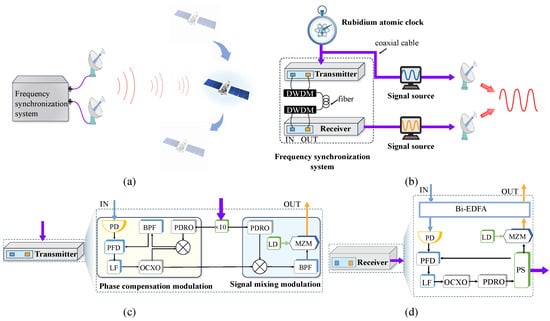
Coherent signal synthesis among multiple remote apertures is a fundamental challenge for next-generation distributed radar and communication systems, and its performance hinges on the precision of the frequency and time references shared by the distributed nodes. In this work, we report a system-level
[...] Read more.
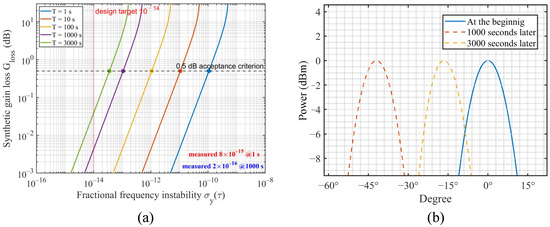
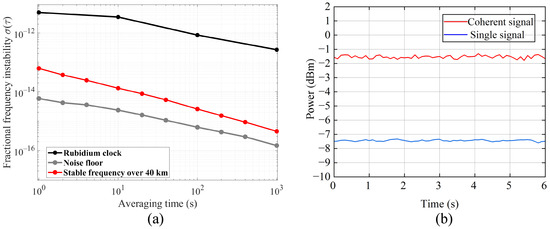
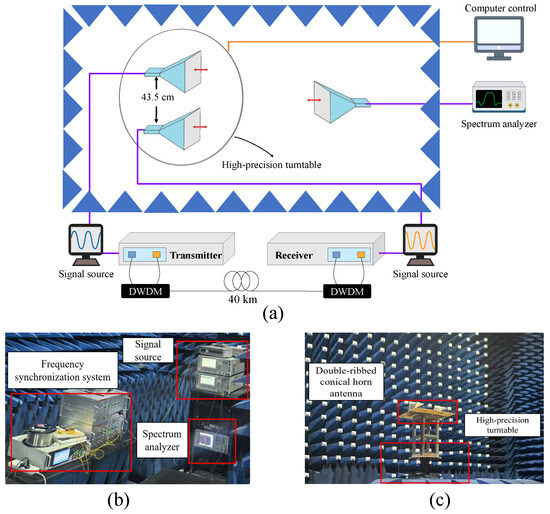
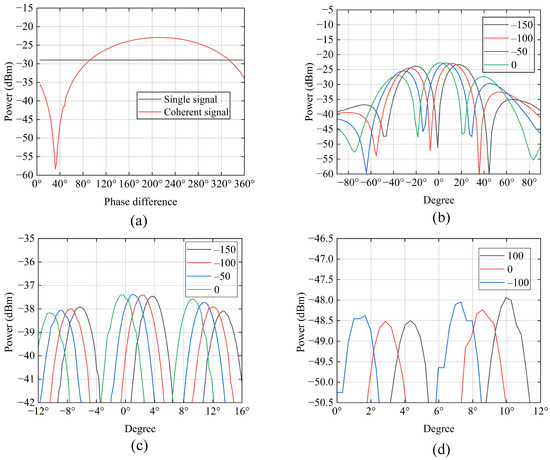
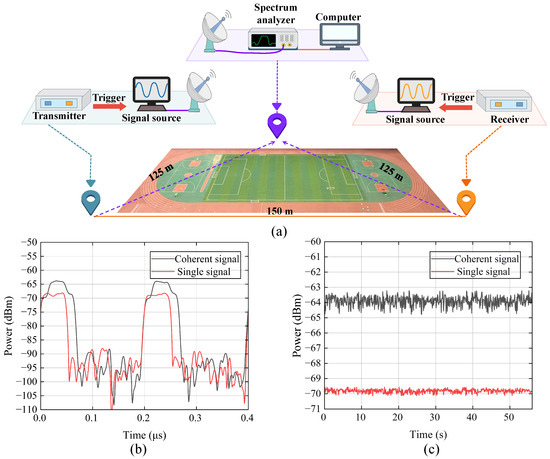
Coherent signal synthesis among multiple remote apertures is a fundamental challenge for next-generation distributed radar and communication systems, and its performance hinges on the precision of the frequency and time references shared by the distributed nodes. In this work, we report a system-level study of a microwave-photonics-based frequency synchronization system that phase-locks two independent signal sources over a 40 km fiber link, and we validate the resulting coherent beamforming and power combining capabilities of the synchronized pair. The synchronization link, built on an adaptive phase-locked loop with dispersion compensation, delivers a frequency stability of at 1 s and at 1000 s. Using the synchronized pair, we perform beam-scanning and beamforming experiments in a microwave anechoic chamber at 1–7 GHz. The measured beam-pointing angles agree with theoretical predictions, and a coherent gain enhancement of 5.9 dB is obtained with a gain loss below 0.1 dB. Furthermore, field tests with a 150 m free-space separation between the two transmitting antennas confirm stable coherent signal synthesis, with the combined amplitude maintained within 1 dB over extended periods. Beyond the specific experimental results, we apply the known gain-loss relation to derive an engineering guideline relating the frequency stability of the synchronization link to the achievable coherent gain loss. These results show that an established microwave-photonics synchronization technology, when integrated with standard signal sources, provides a practical route toward distributed coherent arrays for long-range detection and wideband communication.
Full article
(This article belongs to the Topic Quantum Systems and Their Applications)
►▼
Show Figures

Figure 1
Open AccessArticle
Decision-Theoretic Ecological Optimization of the Curzon–Ahlborn Heat Engine
by
Karen K. Huruntz, Lilit E. Ghukasyan, Ashok Vaseashta and Artak V. Gevorgyan
Entropy 2026, 28(9), 1023; https://doi.org/10.3390/e28091023 - 14 Sep 2026
Abstract
Finite-time heat engines must balance useful power output against irreversibility. We develop a decision-theoretic framework for ecological optimization of the endoreversible Curzon–Ahlborn engine based on its normalized power–loss Pareto frontier. We first examine bargaining-based selection rules. For Newtonian heat transfer, a symmetric Nash
[...] Read more.
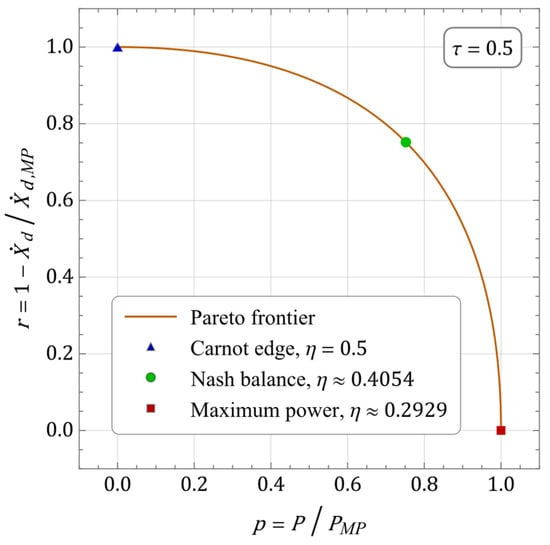
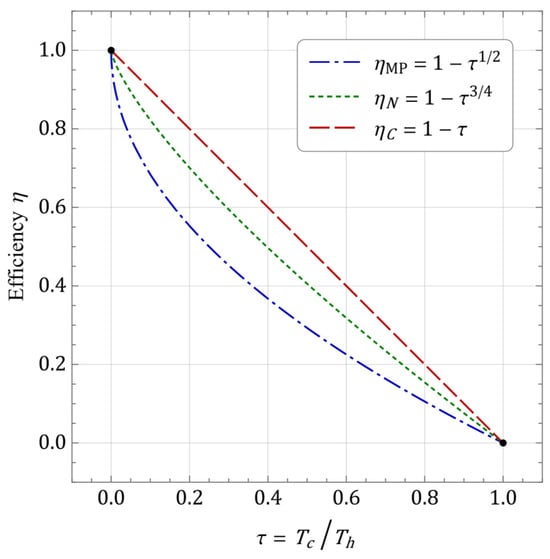
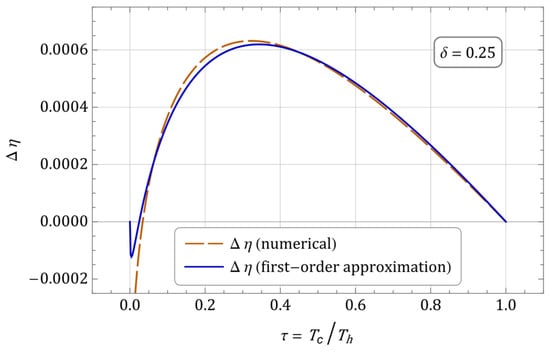
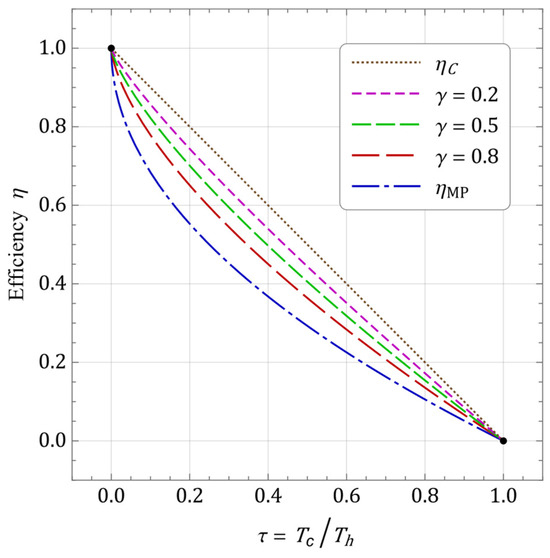
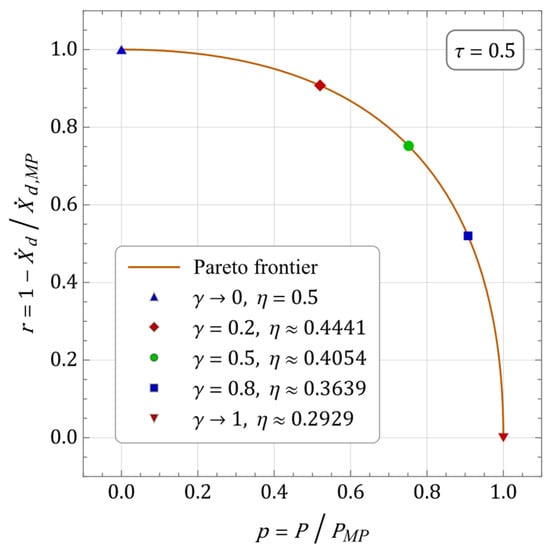
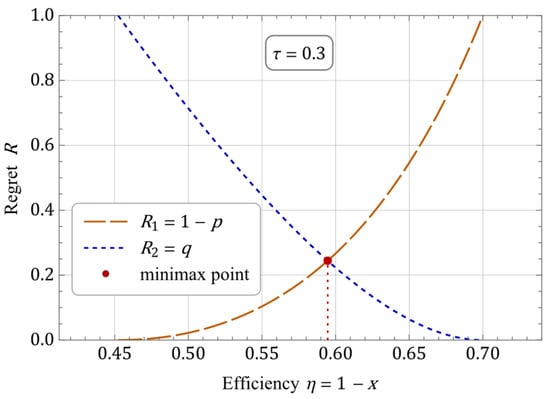
Finite-time heat engines must balance useful power output against irreversibility. We develop a decision-theoretic framework for ecological optimization of the endoreversible Curzon–Ahlborn engine based on its normalized power–loss Pareto frontier. We first examine bargaining-based selection rules. For Newtonian heat transfer, a symmetric Nash compromise between retained power and reduced exergy destruction selects a unique interior operating point with efficiency , where is the cold-to-hot reservoir temperature ratio. The same Newtonian state is recovered by the Arias-Hernández–Angulo-Brown prescription, which fixes the ecological weight from the maximum-power reference. Our contribution is therefore not a new efficiency law but a decision-theoretic interpretation of the established law as a distinguished compromise between maximum-power operation and the reversible Carnot limit. Under the same normalization, the Kalai–Smorodinsky and egalitarian selectors also identify the same balance point. We then extend the bargaining analysis beyond Newton’s law of cooling and compare the Nash continuation with the Arias-Hernández–Angulo-Brown − prescription. Although coinciding in the Newtonian limit, the two approaches separate at first order when the heat-transfer law is perturbed, thereby distinguishing their underlying selection principles. This comparison raises a further question: how should an operating state be chosen when the relative priority assigned to power and irreversibility reduction is itself uncertain? We address this question through minimax-regret optimization, which selects the operating point that minimizes the largest loss relative to the optimum that would have been chosen had the priority been known. Under complete normalized uncertainty in the ecological priority, the regret-robust selector again yields , giving the same operating state a complementary interpretation in terms of robustness to priority uncertainty.
Full article
(This article belongs to the Special Issue Emerging Perspectives on Optimization and Selection Principles in Nonequilibrium Thermodynamics)
►▼
Show Figures

Figure 1
Open AccessArticle
Certified Elimination of Source Candidates Under Capacity, Transit-Time, and Deadline Constraints
by
Zimeng Wang, Chao Zhao and Chung Chan
Entropy 2026, 28(9), 1022; https://doi.org/10.3390/e28091022 - 14 Sep 2026
Abstract
Source identification is constrained not only by network connectivity but also by whether a finite message can reach observed nodes before a deadline. We study deterministic source-candidate elimination in directed networks with arc capacities and transit times. A time-expanded construction gives an exact
[...] Read more.
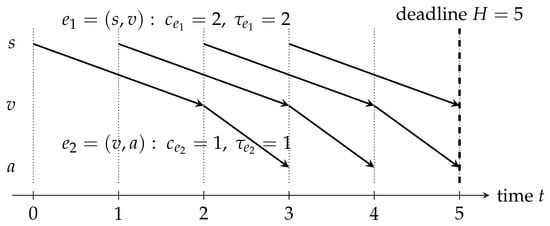
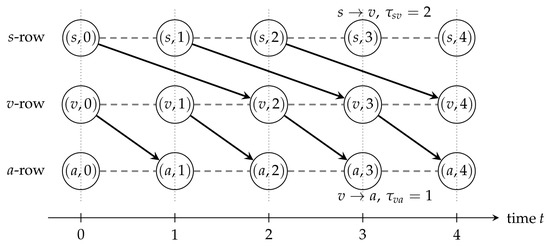
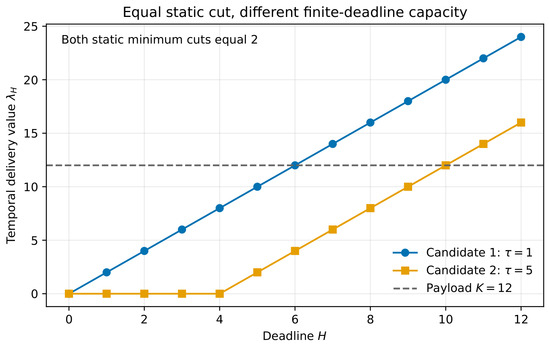
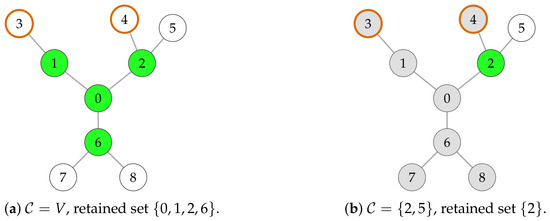
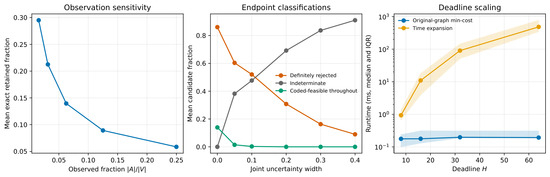
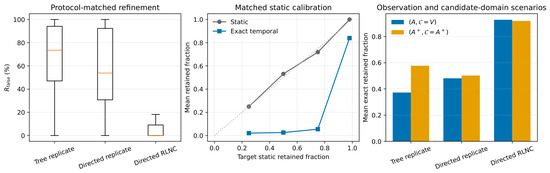
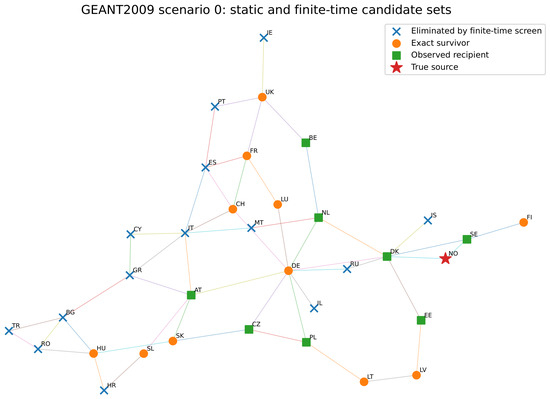
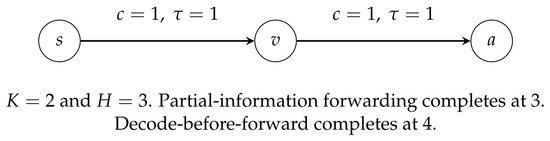
Source identification is constrained not only by network connectivity but also by whether a finite message can reach observed nodes before a deadline. We study deterministic source-candidate elimination in directed networks with arc capacities and transit times. A time-expanded construction gives an exact causal network-coding characterization in which a candidate is retained if and only if its temporal min-cut to every required recipient is at least the message size. Rejection is therefore conservative for any weaker compliant routing or replication protocol. We derive an equivalent minimum-cost circulation computation, monotone certificates under parameter uncertainty, and closed-form formulas for bidirected trees, including linear-time evaluation for uniform capacities and an centroid decomposition algorithm for heterogeneous capacities. Protocol-generated experiments show zero true-source eliminations and substantial refinement in routing regimes. Held-out calibration supports transfer to unseen networks. On benchmark representations of 40 real backbone topology families with 50 to 197 nodes, mean candidate retention falls from 99.3% under static screening to 25.3% under exact temporal screening, without true-source elimination. A focused RLNC diagnostic attributes weak refinement in coding-rich regimes to the static screen retaining all candidates and to broad temporal feasibility, while decode-before-forward restrictions create a substantially larger protocol gap.
Full article
(This article belongs to the Collection Feature Papers in Information Theory)
►▼
Show Figures

Figure 1
Open AccessArticle
A Conditional Structural Organization of the Light-Baryon Spectrum: Eighteen Channels and Nucleon Mass Ratios
by
Bin Li
Entropy 2026, 28(9), 1021; https://doi.org/10.3390/e28091021 - 13 Sep 2026
Abstract
►▼
Show Figures
Quantum chromodynamics (QCD) is the established dynamical account of light baryons. This paper asks whether their ground-state organization and dimensionless mass placement can also be represented by a finite reconstruction calculus. Given a three-grade rooted bilateral incidence complex, twenty-seven ordered routes reduce under
[...] Read more.
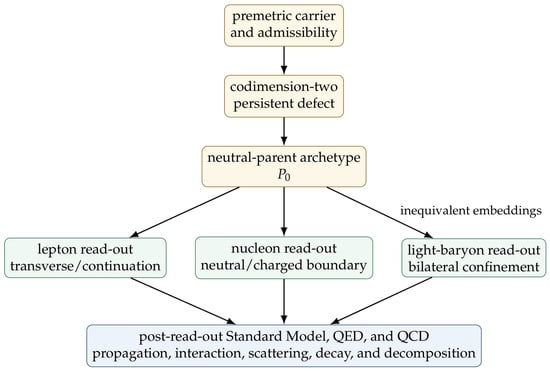
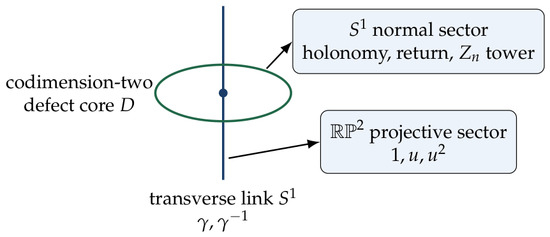
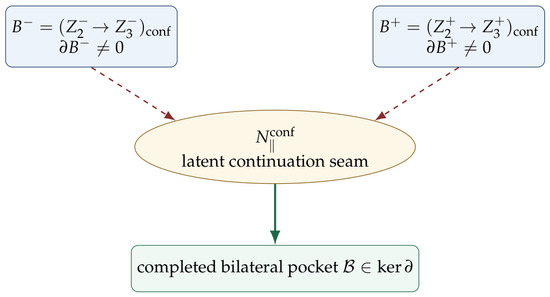
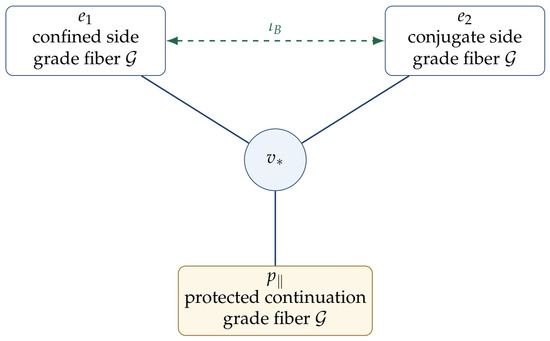
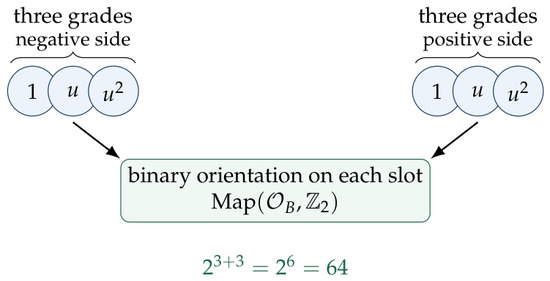
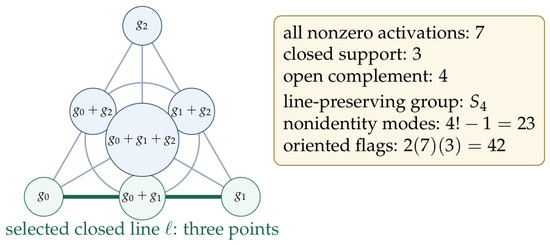
Quantum chromodynamics (QCD) is the established dynamical account of light baryons. This paper asks whether their ground-state organization and dimensionless mass placement can also be represented by a finite reconstruction calculus. Given a three-grade rooted bilateral incidence complex, twenty-seven ordered routes reduce under the invariant side exchange to exactly eighteen classes. Complex linearization gives the standard representation identity , with dimensions ten and eight. Identifying these sectors with the physical decuplet and octet is an explicit light-flavor correspondence postulate; the result is therefore a structural reorganization of known flavor combinatorics, not an independent derivation of the observed multiplets. A scale inherited from the published charged-lepton construction and finite operators then organize the masses. Data-informed closed-neutral and charged-boundary closures reproduce the neutron–electron and proton–electron ratios within 0.92 and 0.35 quoted experimental uncertainties. The leading seven-centroid comparison uses two common normalization integers and five effective discrete operator weights for seven values, so it is not an overdetermined prediction. Higher centroid and charge fibers were recognized with knowledge of the spectrum; their level-six agreements are consequently experimental-normalized reproducibility diagnostics, not statistical significances. A quadratic-local obstruction theorem excludes a simpler sector-blind charge selector, and the frozen carrier-lift complex gives a prospective Delta charge pattern. Published law–constant co-selection results motivate the common structural setting but do not prove the baryon-specific fibers. No continuously adjusted baryon-sector scale or measured fine-structure constant is inserted. The finite mathematics is exact within the declared complexes, while physical selection remains conditional; QCD and QED remain indispensable after read-out.
Full article

Figure 1
Open AccessArticle
Comparative Study of Decision-Level Fusion Strategies for Multi-Sensor CNN-Based Bearing Fault Diagnosis
by
Iman Makrouf, Mourad Zegrari, Khalid Dahi, Demba Diallo, Meryem Abtane and Ilias Ouachtouk
Entropy 2026, 28(9), 1020; https://doi.org/10.3390/e28091020 - 12 Sep 2026
Abstract
►▼
Show Figures
Bearing fault diagnosis increasingly relies on multiple sensors, since compound or multi-location faults can produce signatures that are only partially captured by a single sensor. The decision-level fusion (DLF) of independently trained models offers a practical way to combine such complementary information, yet
[...] Read more.
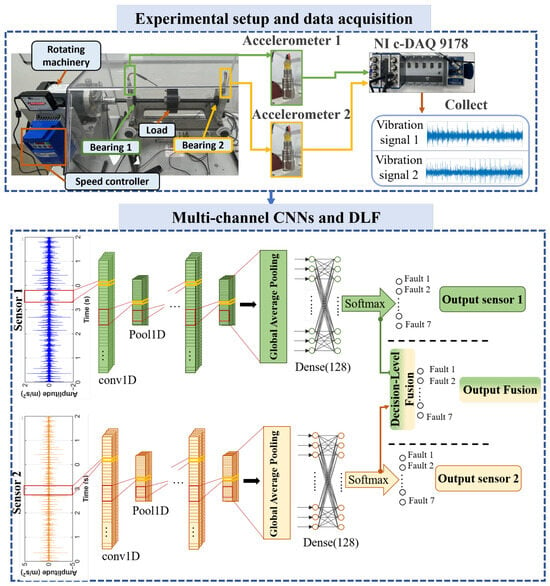
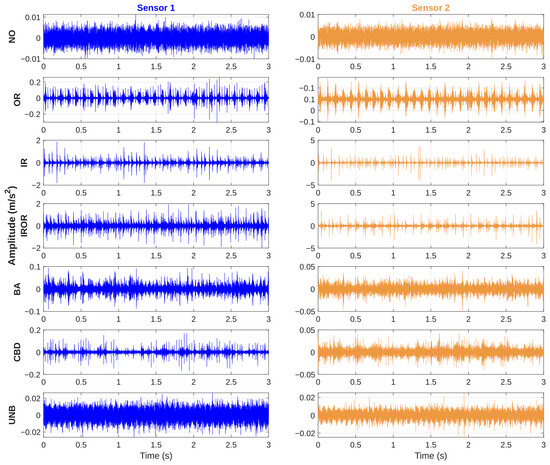
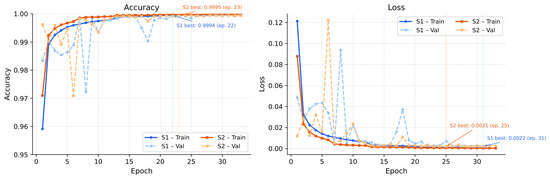
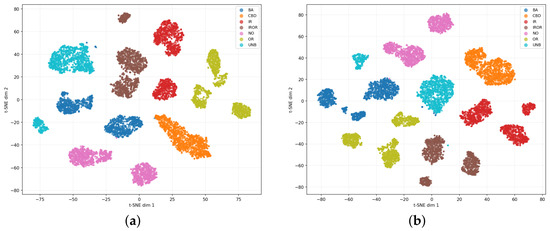
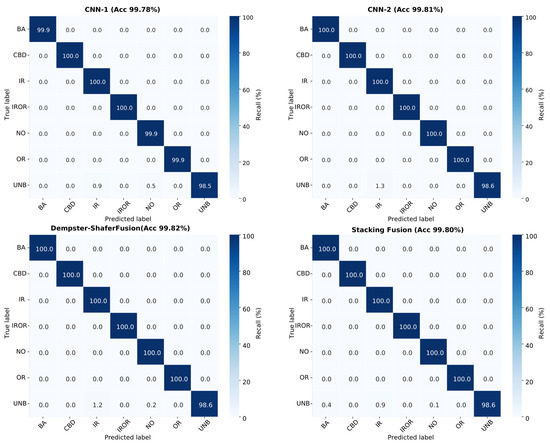
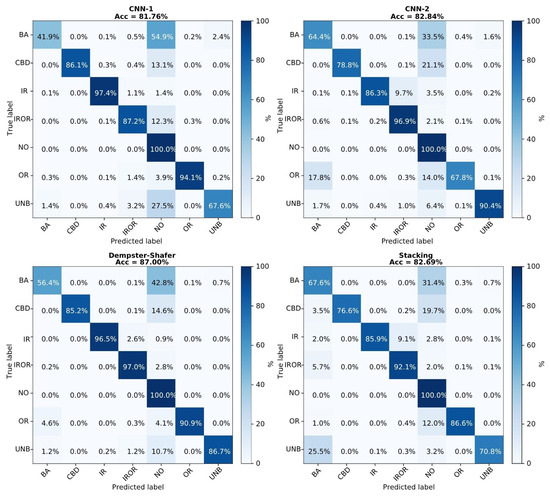
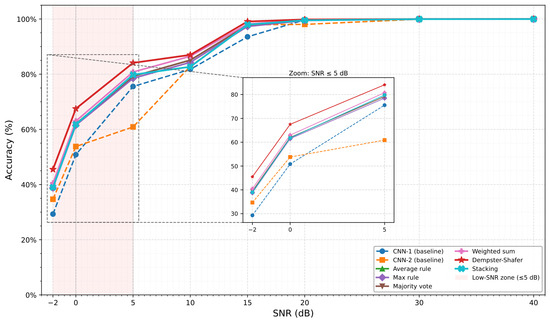
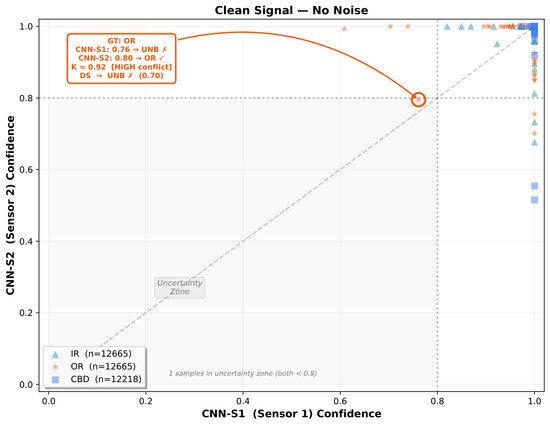
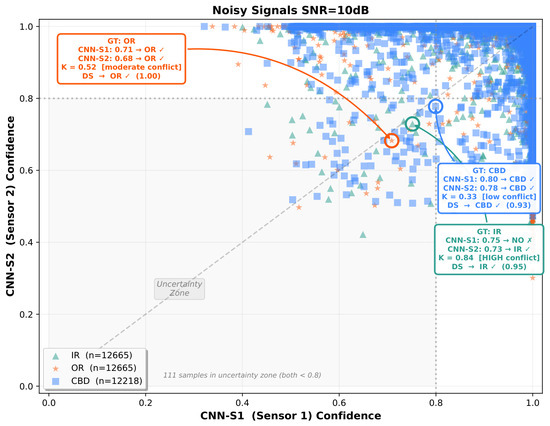
Bearing fault diagnosis increasingly relies on multiple sensors, since compound or multi-location faults can produce signatures that are only partially captured by a single sensor. The decision-level fusion (DLF) of independently trained models offers a practical way to combine such complementary information, yet systematic comparisons across DLF techniques remain scarce, particularly for measurements from different sensor locations. This paper benchmarks six DLF strategies, i.e, Max, Average, Majority Voting, Weighted Sum, Dempster–Shafer, and Stacking, on a dual-branch one-dimensional convolutional neural network (1D-CNN) with each branch trained end-to-end on vibration signals from a distinct bearing location. On a two-sensor test bench covering seven health conditions, all methods exceed 99.7% accuracy on clean signals, while Dempster–Shafer fusion proves markedly more robust under noise, retaining up to 84% accuracy at a 5 dB signal-to-noise ratio (SNR). A conflict-coefficient analysis further provides an interpretable account of when fusion succeeds, linking performance to the confidence complementarity between branches.
Full article

Figure 1
Open AccessArticle
Irreversibility and Quantum Measurement
by
Julio Gea-Banacloche
Entropy 2026, 28(9), 1019; https://doi.org/10.3390/e28091019 - 12 Sep 2026
Abstract
The role played by irreversible processes, at the microscopic scale, in several examples of quantum measurements is studied within a “minimally realist” interpretation of the quantum formalism introduced in a recent publication. The analysis extends and confirms the basic results of the earlier
[...] Read more.
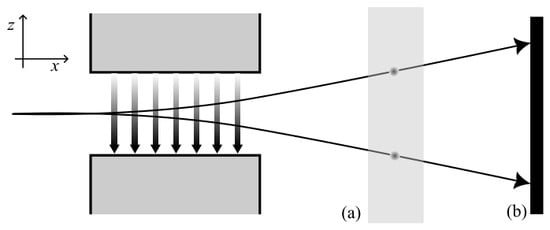
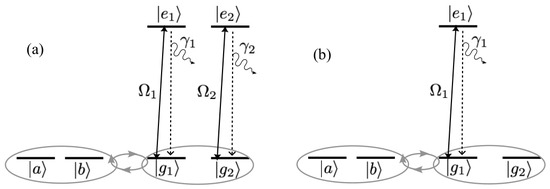
The role played by irreversible processes, at the microscopic scale, in several examples of quantum measurements is studied within a “minimally realist” interpretation of the quantum formalism introduced in a recent publication. The analysis extends and confirms the basic results of the earlier work: separation of the collapse and amplification phases of the measurement, and decoherence and collapse happening already as a consequence of irreversible microscopic processes at the level of the “probe” itself (typically an atom in the examples considered). Additionally, the proposed interpretation of the formalism is shown to be consistent with previous interpretations, and a case for true irreversibility in physics is argued in some detail.
Full article
(This article belongs to the Special Issue Quantum Measurement)
►▼
Show Figures

Figure 1
Open AccessArticle
Self-Normalized Cramér Type Moderate Deviations for Pooled Estimation in Branching Processes in a Random Environment
by
Quanzhen Yao and Mengyu Li
Entropy 2026, 28(9), 1018; https://doi.org/10.3390/e28091018 - 11 Sep 2026
Abstract
We study the estimation of the offspring mean of a supercritical branching process in a random environment when multiple conditionally independent populations evolve in a common environment. Extending the single-population self-normalized Cramér moderate deviation theory to this multi-population setting, we introduce a pooled
[...] Read more.
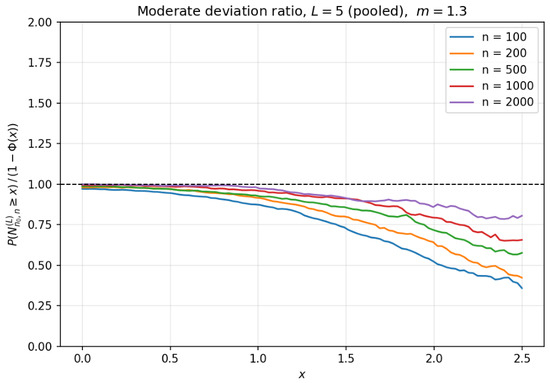
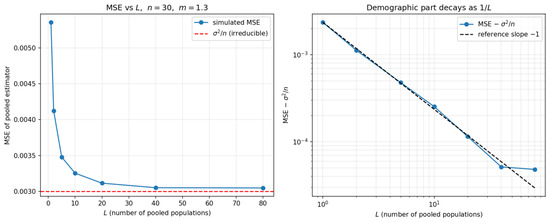
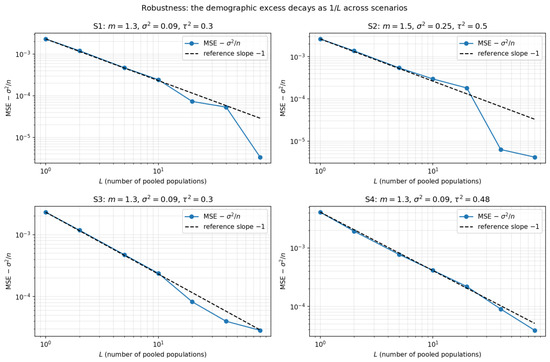
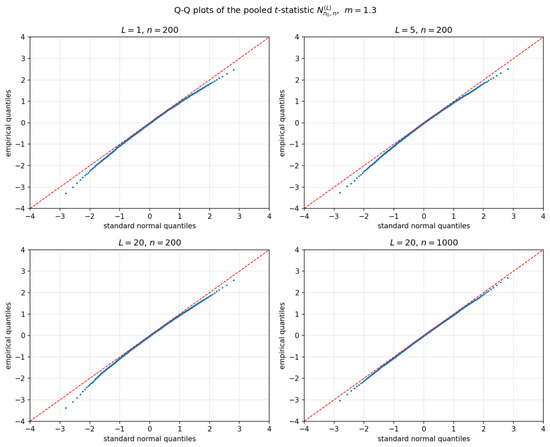
We study the estimation of the offspring mean of a supercritical branching process in a random environment when multiple conditionally independent populations evolve in a common environment. Extending the single-population self-normalized Cramér moderate deviation theory to this multi-population setting, we introduce a pooled Lotka–Nagaev estimator and construct its associated martingale difference sequence. The core of the analysis is an exact decomposition of the pooled conditional variance, which, owing to the shared environment and conditional independence of the populations, separates the environmental and demographic sources of variability. This decomposition reveals a structural dichotomy: the environmental variance is undiluted by pooling, while the demographic variance is attenuated at a rate proportional to the inverse square of the number of populations. Verifying the two conditions of the martingale moderate-deviation theorem yields self-normalized Cramér moderate deviations for the pooled Student t-statistic, together with a Berry–Esseen bound, a moderate deviation principle, and confidence intervals for the offspring mean. The resulting pooling efficiency gain, in which the demographic variance decays inversely with the number of populations while the environmental variance forms an irreducible floor, has no analogue in any single-population framework and is confirmed by Monte Carlo simulation.
Full article
(This article belongs to the Special Issue Convergence Rates for Markov Chains)
►▼
Show Figures

Figure 1
Open AccessArticle
Entropic Confinement in String-Net Models: An Analogue Study via SU(2)k Fusion Categories
by
Xiaodong Yang
Entropy 2026, 28(9), 1017; https://doi.org/10.3390/e28091017 - 11 Sep 2026
Abstract
Recent lattice studies have revealed that the color flux tube between static quark–antiquark pairs exhibits an excess entanglement entropy (flux-tube entanglement entropy, FTE2) that scales linearly with the quark separation . In this paper, we demonstrate similar behavior in a
[...] Read more.
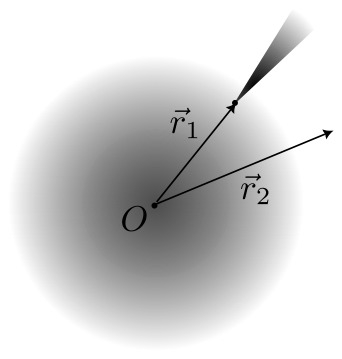
Recent lattice studies have revealed that the color flux tube between static quark–antiquark pairs exhibits an excess entanglement entropy (flux-tube entanglement entropy, FTE2) that scales linearly with the quark separation . In this paper, we demonstrate similar behavior in a string-net model based on fusion categories, where the nontrivial object (analogous to color charge) cannot exist in isolation due to the fusion rules, naturally exhibiting “confinement”. We compute the entanglement entropy of the flux tube connecting two objects using the microcanonical (equal-weight) prescription and find an entropy density . For , the category reduces to the Fibonacci case, yielding an entropy density σ3 = ln φ ≈ 0.4812 (φ is the golden ratio), which is qualitatively comparable in magnitude to the scale inferred from lattice studies and the entropy surface mechanism. Under a thermalization assumption for the fusion-channel degrees of freedom, minimizing the free energy yields a confinement–deconfinement transition at , which is first-order-like (tension sign reversal) rather than a continuous critical transition. The parameter offers a tunable knob, making the family a computable laboratory for entropic confinement. The predicted entropy-density jump can be directly tested in quantum simulator platforms (e.g., Rydberg arrays or superconducting circuits) that realize Fibonacci anyonic models.
Full article
(This article belongs to the Section Non-equilibrium Phenomena)
Open AccessArticle
Defining a Thermodynamic Temperature Scale Using Quantum Dot Heat Engines
by
Shahaab Mansoor Qureshi and Jan Andries Mol
Entropy 2026, 28(9), 1016; https://doi.org/10.3390/e28091016 - 11 Sep 2026
Abstract
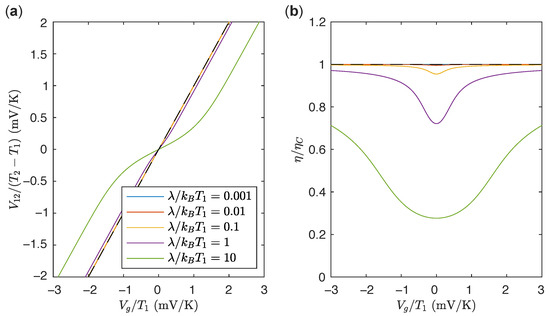
The ability to define a temperature scale that is independent of any particular material is important for testing quantum thermodynamic concepts at the nanoscale. Here, we present a method for constructing a thermodynamic temperature scale from the reversible operation of quantum dot heat
[...] Read more.
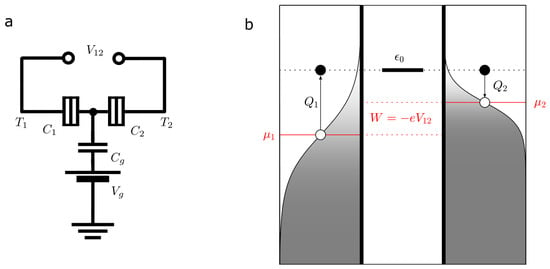
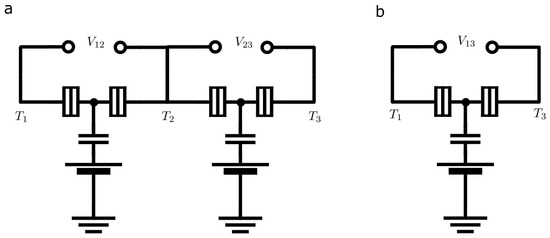
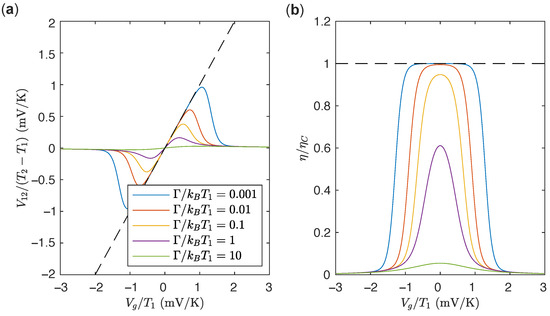
The ability to define a temperature scale that is independent of any particular material is important for testing quantum thermodynamic concepts at the nanoscale. Here, we present a method for constructing a thermodynamic temperature scale from the reversible operation of quantum dot heat engines. In the limit of vanishing dissipation and lifetime broadening, temperature ratios can be determined directly from measurable open-circuit voltages and combined into a self-consistent temperature scale.
Full article
(This article belongs to the Special Issue Thermodynamics at the Nanoscale)
►▼
Show Figures

Figure 1
Open AccessArticle
A Color Image Encryption Scheme Using an Enhanced One-Dimensional Chaotic Map and Adaptive DNA Encoding
by
Jie Jiang, Liyuan Jiao, Yanchun Liang, Adriano Tavares and Lidong Wang
Entropy 2026, 28(9), 1015; https://doi.org/10.3390/e28091015 - 11 Sep 2026
Abstract
Secure transmission and storage of color images remain challenging tasks due to strong inter-pixel correlations and high data volume. This work proposes a one-dimensional sine-tent-logistic-exponential map (STLEM) equipped with numerical boundary correction rules to mitigate finite-precision numerical degradation so as to enhance the
[...] Read more.
Secure transmission and storage of color images remain challenging tasks due to strong inter-pixel correlations and high data volume. This work proposes a one-dimensional sine-tent-logistic-exponential map (STLEM) equipped with numerical boundary correction rules to mitigate finite-precision numerical degradation so as to enhance the unpredictability of chaos-driven cryptosystems. We benchmark STLEM against classic logistic, tent, and sine maps via Lyapunov exponents, autocorrelation, approximate entropy, permutation entropy, Lempel-Ziv complexity, and Kolmogorov–Sinai entropy. Bifurcation diagrams, the 0–1 test, and NIST statistical tests are further adopted to characterize its chaotic dynamics and randomness. Comparative results verify that STLEM achieves improved dynamical complexity and randomness performance. Built upon the proposed STLEM, this paper constructs a color-image encryption scheme that employs a 256-bit master key and two groups of chaotic parameters to produce key-related chaotic sequences. The cryptosystem integrates dynamic edge expansion, chaotic permutation, position-dependent adaptive DNA encoding, DNA-domain chained diffusion, and two successive row-column permutation phases. HMAC-SHA-256 is utilized to generate plaintext-aware initial conditions and perform ciphertext authentication prior to decryption. Experimental validations demonstrate complete plaintext recovery under valid secret inputs, while authentication rejects invalid keys and tampered ciphertexts. Ciphered images exhibit high information entropy, negligible adjacent-pixel correlations, and satisfactory number of pixel change rate (NPCR) and unified average changing intensity (UACI) metrics. Benefiting from a sufficiently large key space and computational complexity, the proposed scheme is resilient against brute-force attacks and well suited for secure color-image communication scenarios, rather than acting as a general-purpose replacement for standard block ciphers.
Full article
(This article belongs to the Section Information Theory, Probability and Statistics)
►▼
Show Figures

Figure 1
Open AccessArticle
A Quantum-Inspired Residual Self-Attention Network for Multimodal Sentiment Analysis
by
Yupeng Liu, Xianjie Feng and Yewang Zhong
Entropy 2026, 28(9), 1014; https://doi.org/10.3390/e28091014 - 11 Sep 2026
Abstract
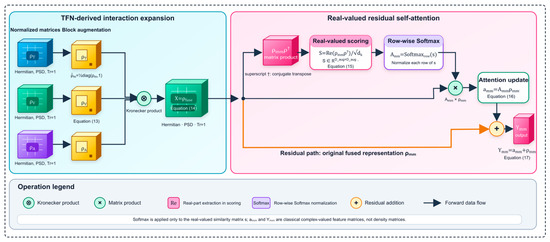
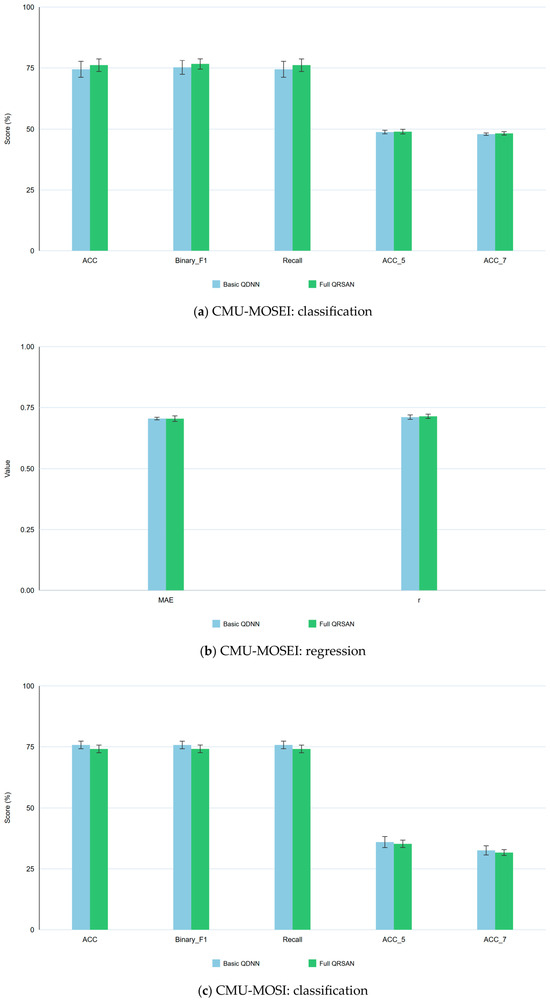
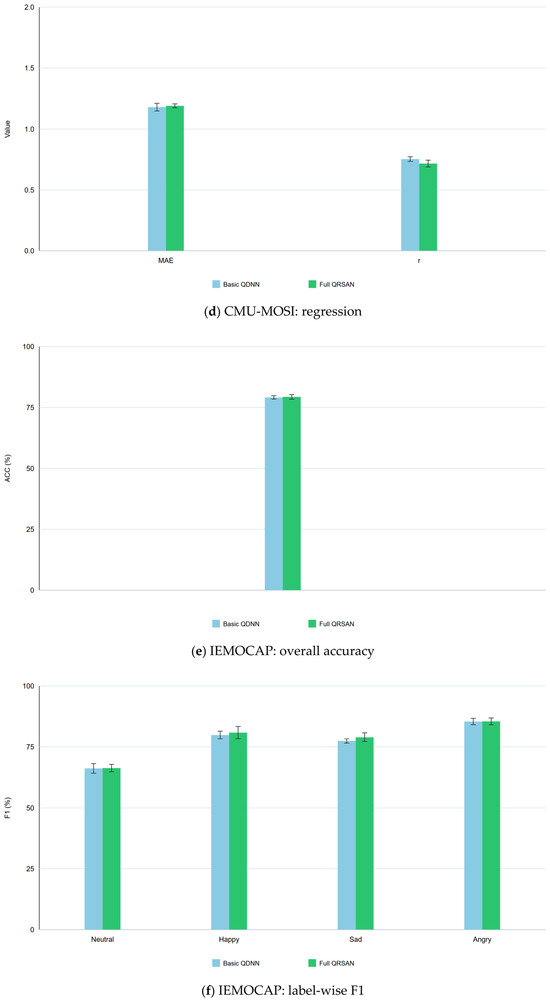
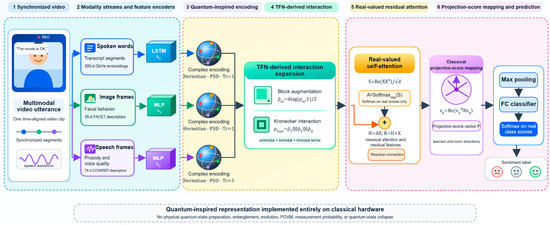
Multimodal sentiment analysis is challenging because textual, visual, and acoustic evidence is heterogeneous and oft en weakly aligned. Here, we present QRSAN, a quantum-inspired residual self-attention network that integrates an LSTM text encoder, modality-specific multilayer perceptrons for visual and acoustic inputs, normalized complex-valued
[...] Read more.
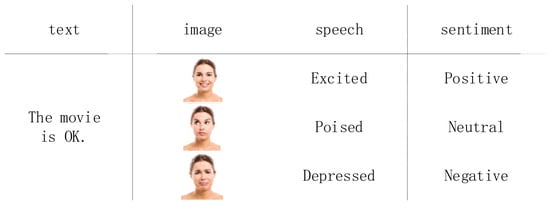
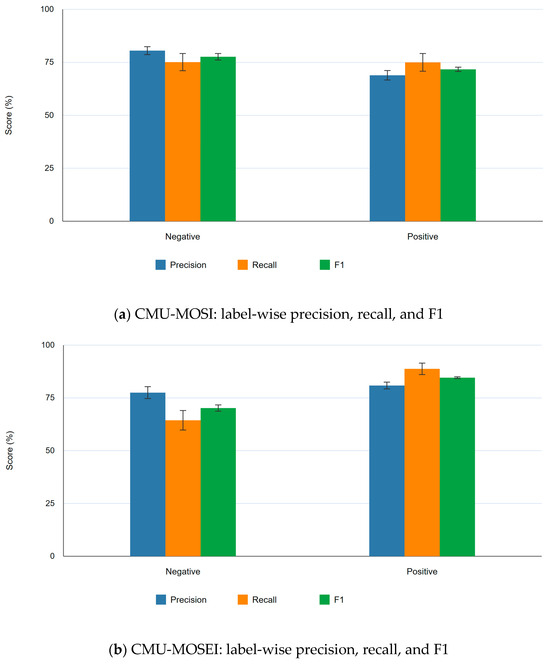
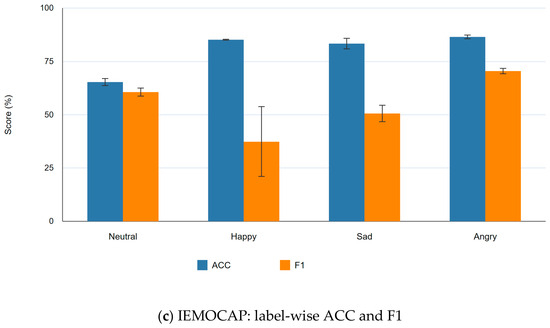
Multimodal sentiment analysis is challenging because textual, visual, and acoustic evidence is heterogeneous and oft en weakly aligned. Here, we present QRSAN, a quantum-inspired residual self-attention network that integrates an LSTM text encoder, modality-specific multilayer perceptrons for visual and acoustic inputs, normalized complex-valued encoding, a TFN-derived interaction expansion, real-valued residual self-attention, and classical projection-score mapping. QRSAN runs entirely on classical hardware and does not perform physical quantum computation. Across CMU-MOSI, CMU-MOSEI, and IEMOCAP, QRSAN was evaluated using a common protocol. It achieved the highest numerical mean ACC and Binary_F1 among the evaluated models on CMU-MOSI, whereas its IEMOCAP label-wise accuracy was below that of EF-LSTM. These findings support the utility of combining constrained complex-valued representations with residual self-attention using the evaluated settings, without claiming universal state-of-the-art performance.
Full article
(This article belongs to the Special Issue Recent Advances in Quantum Machine Learning)
►▼
Show Figures

Figure 1
Open AccessArticle
Hyperadaptability Through Self-Organizing Behavioral Search
by
Alex Baranski and Jun Tani
Entropy 2026, 28(9), 1013; https://doi.org/10.3390/e28091013 - 11 Sep 2026
Abstract
Artificially replicating the extraordinary adaptive potential of organisms remains difficult. Machine learning approaches based on big data pursue behavioral adaptation through generalization from training data, but often learn slowly and struggle with out-of-distribution situations. We propose that organisms may not adapt primarily through
[...] Read more.
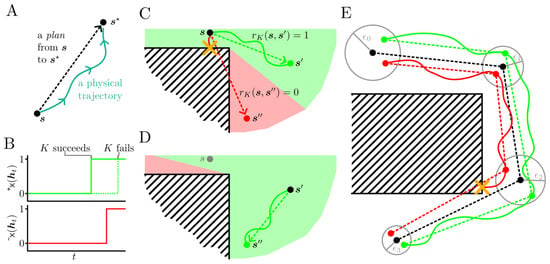
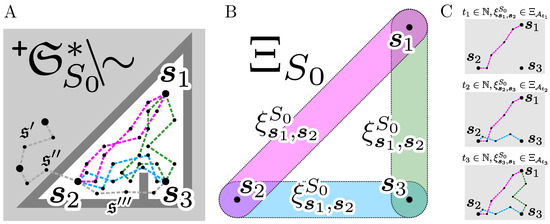
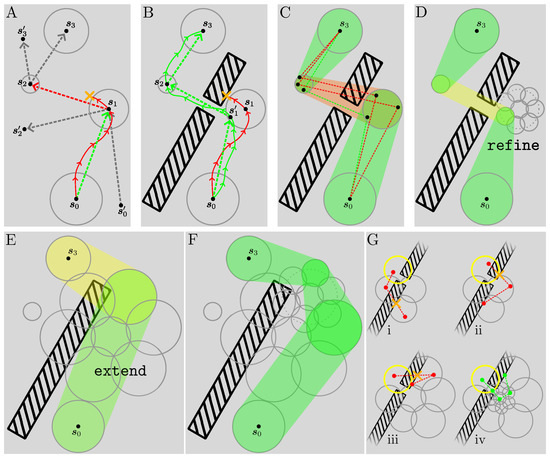
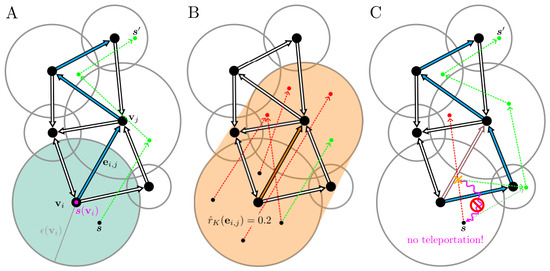
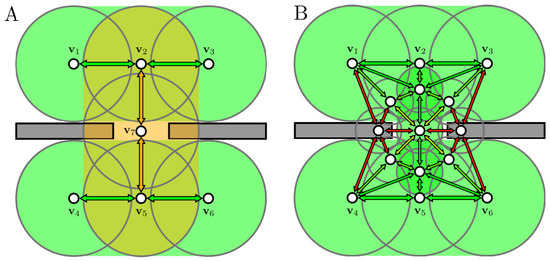
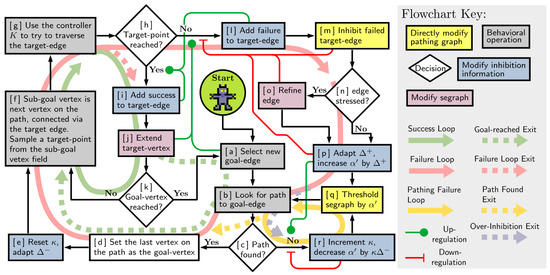
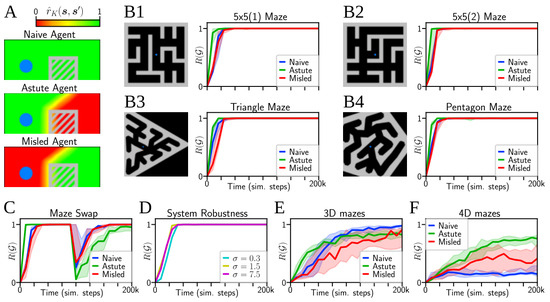
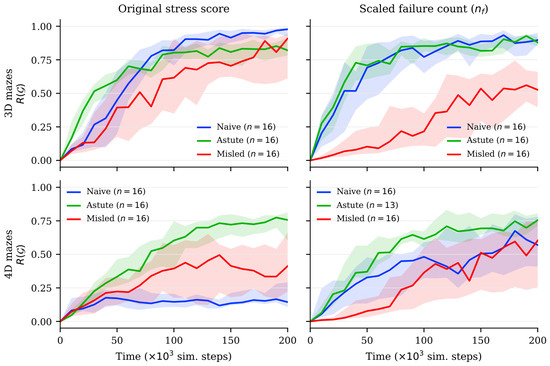
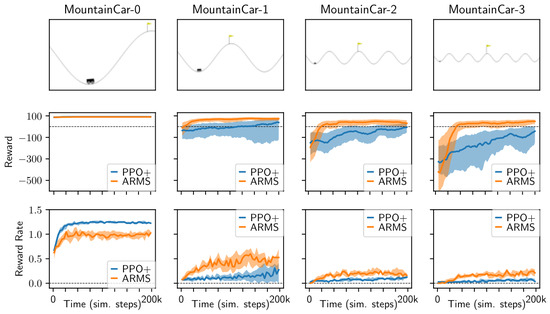
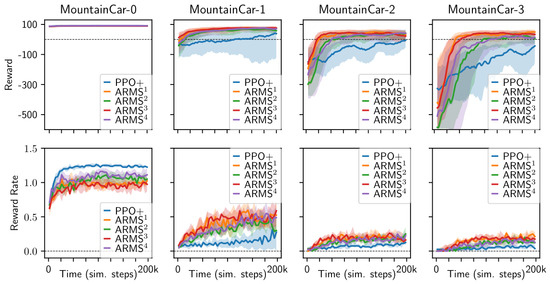
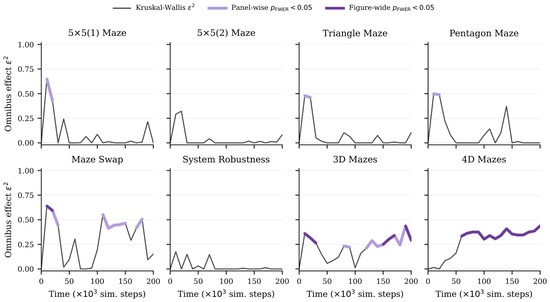
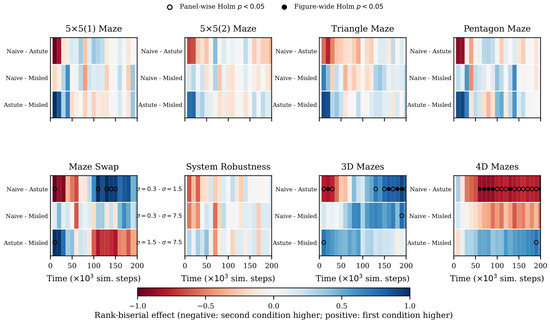
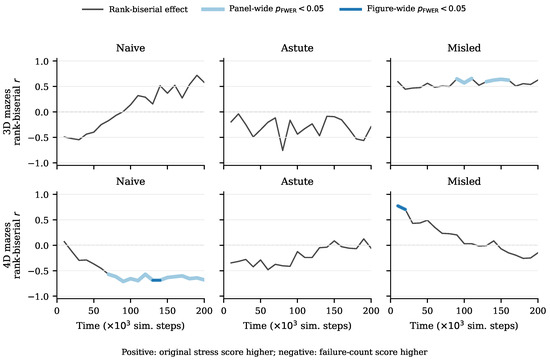
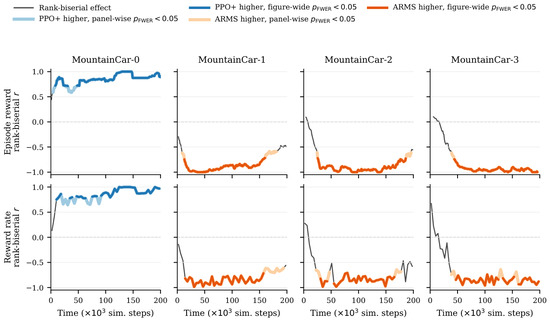
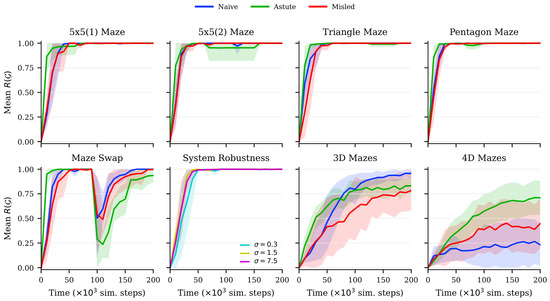
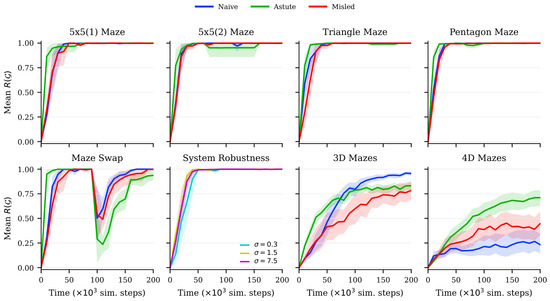
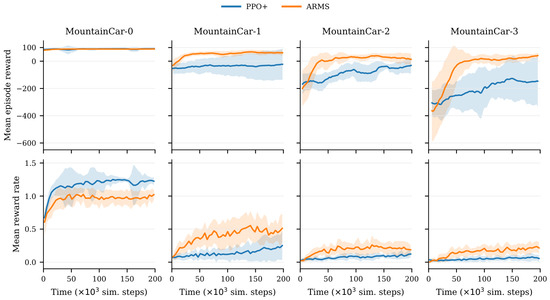
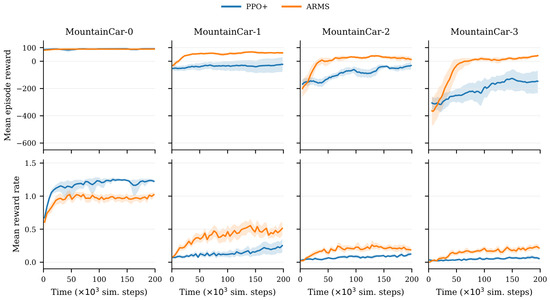
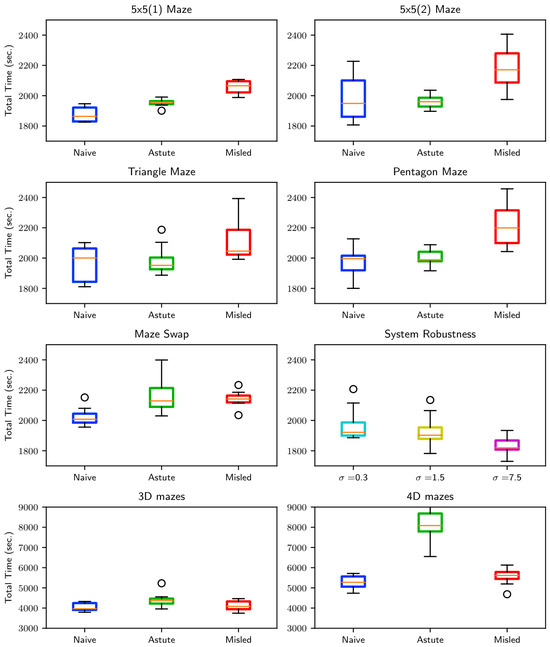
Artificially replicating the extraordinary adaptive potential of organisms remains difficult. Machine learning approaches based on big data pursue behavioral adaptation through generalization from training data, but often learn slowly and struggle with out-of-distribution situations. We propose that organisms may not adapt primarily through generalization alone but by rapidly eliminating infeasible solutions through online trial-and-error, effectively performing a search over the behavior space. If this search is complete, it is guaranteed to find an existing physically robust solution within a finite but unbounded time. For continuous behavioral domains that contain uncountably infinite behaviors, we introduce a mathematical framework for constructing a countably infinite dense subset of all behaviors using a mutable graph to segment behavior space, allowing any behavior to be progressively approximated arbitrarily well. Graph evolution is regulated by a heuristic feedback loop between outward growth and internal refinement; refinement is partially determined by a Bernoulli variance term related to binary entropy. Using this construction, we implement a proof-of-concept behavioral search algorithm and evaluate it on maze navigation and simple continuous control tasks. These preliminary results establish the practical feasibility of this approach in low-dimensional simulated environments while exposing unresolved limitations in terms of dimensional scaling and the incorporation of prior information.
Full article
(This article belongs to the Special Issue Complexity of AI)
►▼
Show Figures

Figure 1
Open AccessArticle
High-Dimensional Linear Preference Model
by
Gil Ariel and Omer Peleg
Entropy 2026, 28(9), 1012; https://doi.org/10.3390/e28091012 - 11 Sep 2026
Abstract
Multiple-criteria decision analysis (MCDA) is a branch of operations research concerned with choices based on several quantifiable factors. Here, we focus on high-dimensional markets, in which each available product is described by a large number of features. Taking a probabilistic approach, we define
[...] Read more.
Multiple-criteria decision analysis (MCDA) is a branch of operations research concerned with choices based on several quantifiable factors. Here, we focus on high-dimensional markets, in which each available product is described by a large number of features. Taking a probabilistic approach, we define a market as a collection of alternatives in a decision-making scenario governed by a linear utility function. Analytic approximations for the market share and its moments are derived in the limit of a large population and a large number of measured features. We identify a single parameter, termed the degree of subjectivity, that places markets on a continuous spectrum ranging from fully objective to fully subjective. At an intermediate value, the market is competitive in the sense that it maximizes the entropy of the market-share distribution. Empirical analysis of several real markets indicates that they can indeed be classified by this parameter, yielding predictable decision patterns and a unified, relative measure of competitiveness across markets. Simulations involving non-linear utility functions and a trained machine-learning classifier provide preliminary evidence that similar behavior may also arise beyond the linear model, suggesting that the degree of subjectivity may be useful as a diagnostic in some broader multi-feature decision problems.
Full article
(This article belongs to the Section Multidisciplinary Applications)
Journal Menu
► ▼ Journal Menu-
- Entropy Home
- Aims & Scope
- Editorial Board
- Reviewer Board
- Topical Advisory Panel
- Video Exhibition
- Instructions for Authors
- Special Issues
- Topics
- Sections & Collections
- Article Processing Charge
- Indexing & Archiving
- Editor’s Choice Articles
- Most Cited & Viewed
- Journal Statistics
- Journal History
- Journal Awards
- Society Collaborations
- Conferences
- Editorial Office
Journal Browser
► ▼ Journal Browser-
arrow_forward_ios
Forthcoming issue
arrow_forward_ios Current issue - Vol. 28 (2026)
- Vol. 27 (2025)
- Vol. 26 (2024)
- Vol. 25 (2023)
- Vol. 24 (2022)
- Vol. 23 (2021)
- Vol. 22 (2020)
- Vol. 21 (2019)
- Vol. 20 (2018)
- Vol. 19 (2017)
- Vol. 18 (2016)
- Vol. 17 (2015)
- Vol. 16 (2014)
- Vol. 15 (2013)
- Vol. 14 (2012)
- Vol. 13 (2011)
- Vol. 12 (2010)
- Vol. 11 (2009)
- Vol. 10 (2008)
- Vol. 9 (2007)
- Vol. 8 (2006)
- Vol. 7 (2005)
- Vol. 6 (2004)
- Vol. 5 (2003)
- Vol. 4 (2002)
- Vol. 3 (2001)
- Vol. 2 (2000)
- Vol. 1 (1999)
Highly Accessed Articles
Latest Books
E-Mail Alert
News
Topics
Topic in
AI, Applied Sciences, Computers, Electronics, Entropy, Future Internet, Information, IoT, Sensors, Telecom
Advances in Sixth Generation and Beyond (6G&B)
Topic Editors: Luis Javier García Villalba, Ana Lucila Sandoval OrozcoDeadline: 31 October 2026
Topic in
Entropy, IJMS, International Journal of Topology, MAKE, Mathematics, Quantum Reports, Symmetry
Topological, Quantum, and Molecular Information Approaches to Computation and Intelligence
Topic Editors: Michel Planat, Edward A. RietmanDeadline: 31 December 2026
Topic in
Entropy, Quantum Reports, Symmetry, Universe, Physics
Quantum Systems and Their Applications
Topic Editors: Chao Zheng, Jim FreericksDeadline: 28 February 2027
Topic in
Entropy, Future Internet, Healthcare, Sensors, Data
Communications Challenges in Health and Well-Being, 2nd Edition
Topic Editors: Dragana Bajic, Konstantinos Katzis, Gordana GardasevicDeadline: 20 March 2027
Conferences
Special Issues
Special Issue in
Entropy
Quantum Nonstationary Systems—Second Edition
Guest Editor: Viktor DodonovDeadline: 20 September 2026
Special Issue in
Entropy
Quantum and Classical Mpemba Effects: From Theoretical Models to Practical Applications
Guest Editors: Jixuan Hou, Zhiyue LuDeadline: 20 September 2026
Special Issue in
Entropy
Synergy and Redundancy Measures: Theory and Applications to Characterize Complex Systems, Build Models, and Shape Neural Network Representations
Guest Editor: Daniel ChicharroDeadline: 20 September 2026
Special Issue in
Entropy
Information and Coding Theory for Distributed Learning, Storage, Scheduling, and Security
Guest Editors: Chi Wan Sung, Kenneth ShumDeadline: 22 September 2026
Topical Collections
Topical Collection in
Entropy
Advances in Applied Statistical Mechanics
Collection Editor: Antonio M. Scarfone
Topical Collection in
Entropy
Wavelets, Fractals and Information Theory
Collection Editor: Carlo Cattani
Topical Collection in
Entropy
Foundations of Statistical Mechanics
Collection Editor: Antonio M. Scarfone